Agent365 Roles, Identity, and Access
Atlanta, USA

Last updated: 2026-08-04
References
Why this matters
Most agent incidents are identity incidents first. Over-privileged access, inconsistent service principals, and weak approval separation can quickly become enterprise-scale data or control failures.
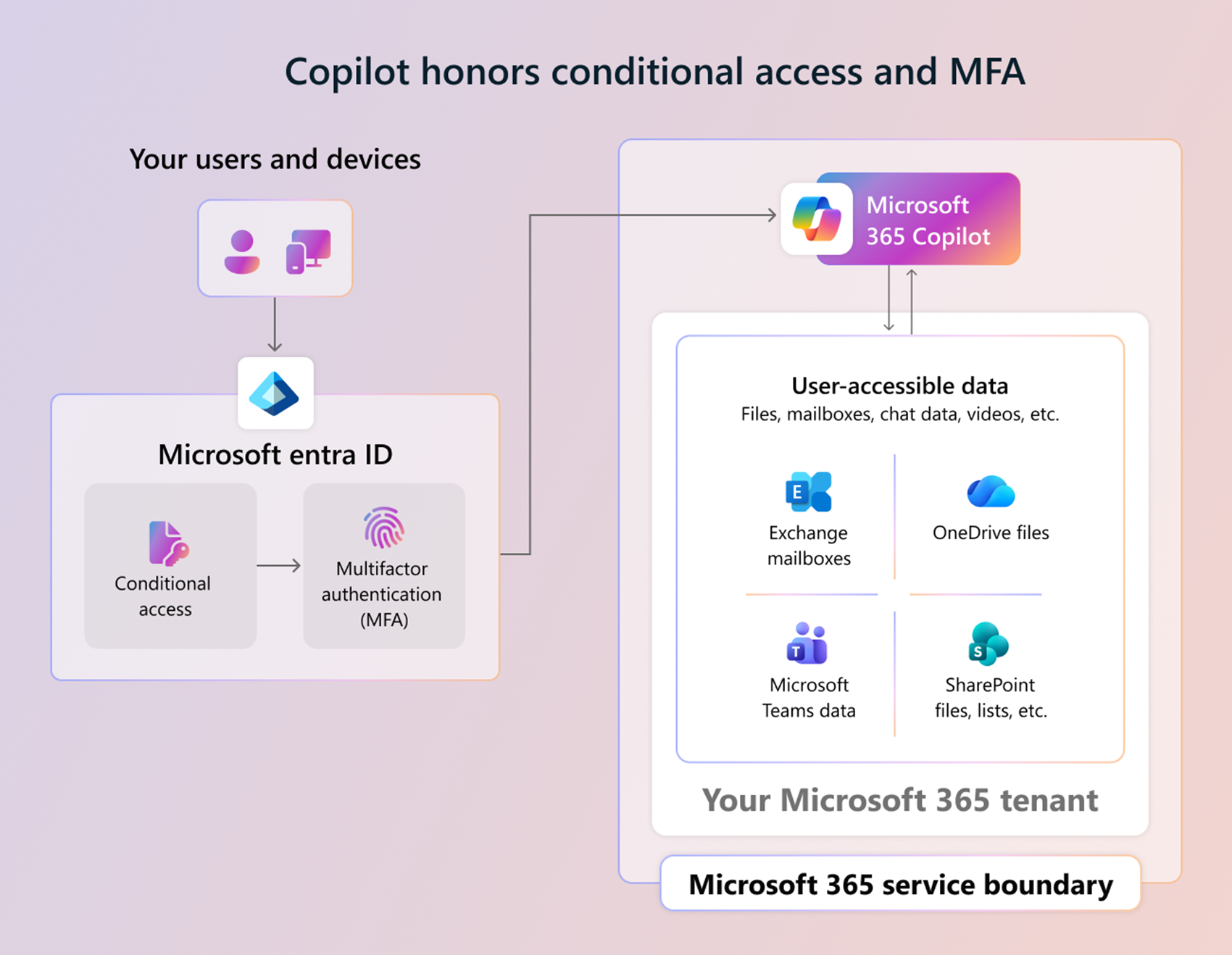
Source: How Microsoft 365 Copilot works.
Role model
| Role | Responsibility | Must not also own |
|---|---|---|
| Agent business owner | Outcome definition, risk acceptance, prioritization | Security exception approval |
| Agent technical owner | Implementation, release, support | Independent audit sign-off |
| AI (artificial intelligence) admin | Registry, lifecycle operations, policy execution | Unreviewed production bypass |
| Security operations | Monitoring, triage, response | Sole authority for business risk acceptance |
| Compliance owner | Data handling controls and evidence quality | Unilateral deployment approvals |
Identity patterns
- User-delegated execution for user-context tasks with strict access inheritance.
- Agent-owned identity for autonomous workflows with explicit resource permissions.
- Hybrid identity with constrained elevation for high-trust operations.
Access principles
- Least privilege by default, with role-based access control (RBAC (role-based access control)) at the narrowest practical scope.
- Just-in-time elevation for sensitive lifecycle operations.
- Policy-based restrictions for non-compliant devices and risky sessions.
- Explicit approval for cross-domain data access and external tooling.
Minimum controls
- Every agent identity has named owner and renewal cadence.
- Privileged assignments require time-bound activation and logging.
- Conditional access protects admin and high-risk workflows.
- Access reviews run on a fixed schedule with documented remediation.
- Break-glass usage is auditable and independently reviewed.
Validation scenarios
| Scenario | Expected result |
|---|---|
| Suspended user prompts an agent | Access denied and event captured |
| Agent requests out-of-scope resource | Request blocked and owner alerted |
| Privileged action without approval context | Action denied or queued for approval |
| Policy exception expired | Access automatically reverts to baseline |
Business example
A team introduces agent-owned identities for unattended workflows. During pilot, it detects broad graph permissions and replaces them with scoped permissions plus just-in-time elevation for sensitive actions. This reduces standing privilege and improves audit traceability without blocking delivery.