Skip to content

Understand privacy, security, and administration

This domain asks you to apply least privilege and choose controls that fit the repository and organization context.

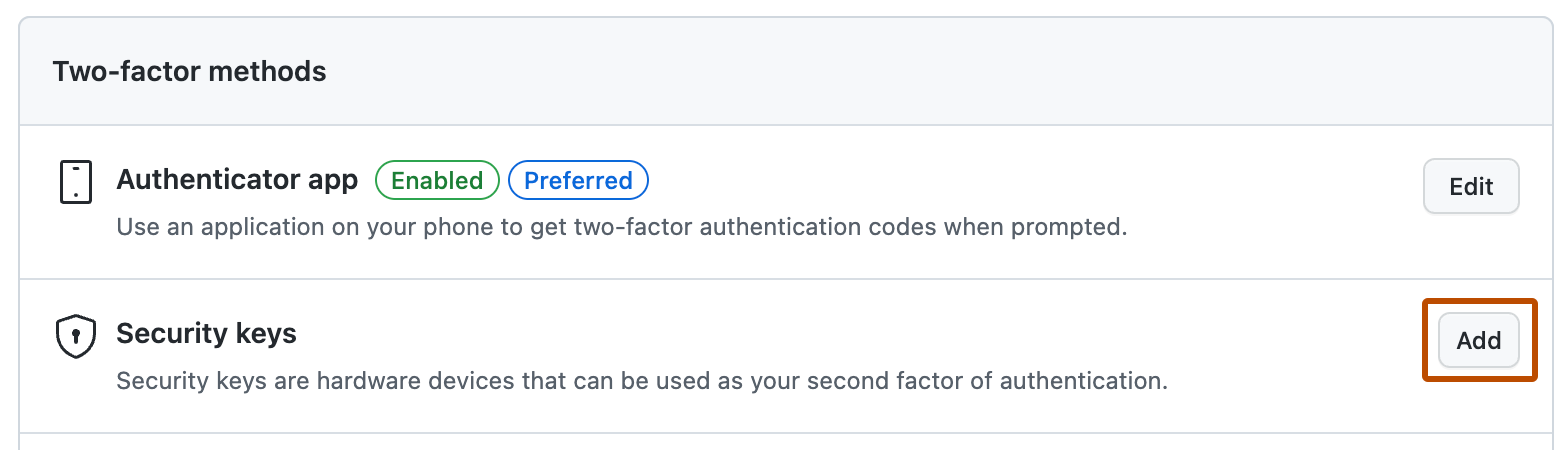
GitHub interface for adding a security key as a two-factor authentication method
Official GitHub Docs product visual: adding a security key for two-factor authentication.
Control What it protects or governs Study cue
Two-factor authentication and passkeys Account sign-in Strengthen identity verification.
Repository roles and organization roles Permissions to act Grant only the access required.
Repository visibility Who can discover and access a repository Consider public, private, and internal choices.
Branch protection The conditions required before protected branches change Connect it to review and status checks.
Teams Group-based access and communication Simplify consistent organization access.
Enterprise Managed Users Centrally managed enterprise identities Understand the governance purpose.
flowchart TD A[Identity] --> B[Authentication: 2FA or passkey] B --> C[Organization membership] C --> D[Team or role permissions] D --> E[Repository access] E --> F[Branch protection and review rules]

Original visual based on the security and access-management areas in the official GH-900 study guide.

Decision table

Need First concept to consider
Make a contributor prove identity at sign-in 2FA or passkey
Give a group the same repository access Team and repository role
Prevent direct changes to a critical branch Branch protection rules
Govern Copilot across an organization Organization-wide Copilot policies
Control user accounts at enterprise scale Enterprise Managed Users

Study secure repository practices and GitHub administration.

Identity and authentication

Security begins with knowing who is accessing GitHub and requiring appropriate proof of identity.

Control What it does Common scenario
Password A primary sign-in secret It should not be the only layer of account protection.
Two-factor authentication (2FA) Requires an additional verification factor Protect an account when a password is compromised.
Passkey A modern authentication method tied to a device or authenticator Reduce reliance on reusable passwords.
Recovery method Helps restore access safely Plan it before an account-access emergency.
Enterprise Managed User An enterprise-managed identity model Centralize identity lifecycle and access in an enterprise setting.

Permission model

The central exam principle is least privilege: grant the smallest level of access that allows someone to do their work, then review it as needs change.

Scope What it governs Examples to recognize
Repository role What someone can do in a repository Read, triage, write, maintain, or administer based on available roles.
Team A reusable group of organization members Apply consistent access to multiple repositories.
Organization role Organization-level responsibilities Manage members, settings, or other organization functions.
Enterprise role Enterprise-wide administration responsibilities Apply governance above individual organizations.

Least-privilege scenario guide

Need First concept to consider
A group needs the same repository access Create or use a team, then grant the appropriate repository role.
A user only needs to review triaged issues Choose a limited repository role rather than administrator access.
A central team manages identity at scale Consider enterprise identity and EMU concepts.
A policy needs to apply across an organization Use the organization administration and policy surface.

Visibility and repository protection

Control What decision it supports
Public visibility The repository can be discovered and accessed publicly.
Private visibility Access is limited to explicitly authorized people or teams.
Internal visibility Access is limited to members of an enterprise where available.
Branch protection Changes to important branches must satisfy configured requirements.
Required reviews A merge needs the designated review conditions.
Required status checks Automated checks must pass before a protected branch accepts changes.

Branch-protection reasoning

Branch protection does not replace collaboration. It formalizes the conditions that must be met before a protected branch is changed. In an exam scenario, connect the desired outcome to the appropriate control: review quality, automated validation, or preventing direct unreviewed changes.

Organization administration and Copilot policy

Administration area Why it matters
Members and teams Organize people and access at scale.
Roles Delegate responsibility without giving every user full control.
Organization settings Configure features and collaboration behavior.
Copilot policy management Govern Copilot use for organization members.
Enterprise Managed Users Integrate centrally managed identity and governance.

Readiness check

  • Explain how 2FA and passkeys strengthen account access.
  • Choose the least-privileged role or team approach for a simple access scenario.
  • Distinguish public, private, and internal visibility.
  • Identify when branch protection, review requirements, and status checks apply.
  • Describe the governance purpose of EMUs and organization-wide Copilot policies.
Suggested answers
  1. Account protection: 2FA requires an additional verification factor beyond a password. Passkeys provide a modern authentication approach that can reduce exposure to reusable password credentials.
  2. Least privilege: Put people with the same access needs into a team and grant that team only the repository role required. Avoid administrator access when read, triage, write, or maintain access is enough.
  3. Visibility: Public repositories are broadly discoverable, private repositories are restricted to authorized access, and internal repositories are limited to enterprise members where that option is available.
  4. Protected branches: Use branch protection when important branches need controls such as required reviews, passing status checks, or restrictions on direct updates before changes are merged.
  5. Governance: Enterprise Managed Users support centrally managed enterprise identity, while organization-wide Copilot policies help administrators govern Copilot use across organization members.